A deposit option does not confirm withdrawal access, clearing times or the conditions attached to a casino payment method.
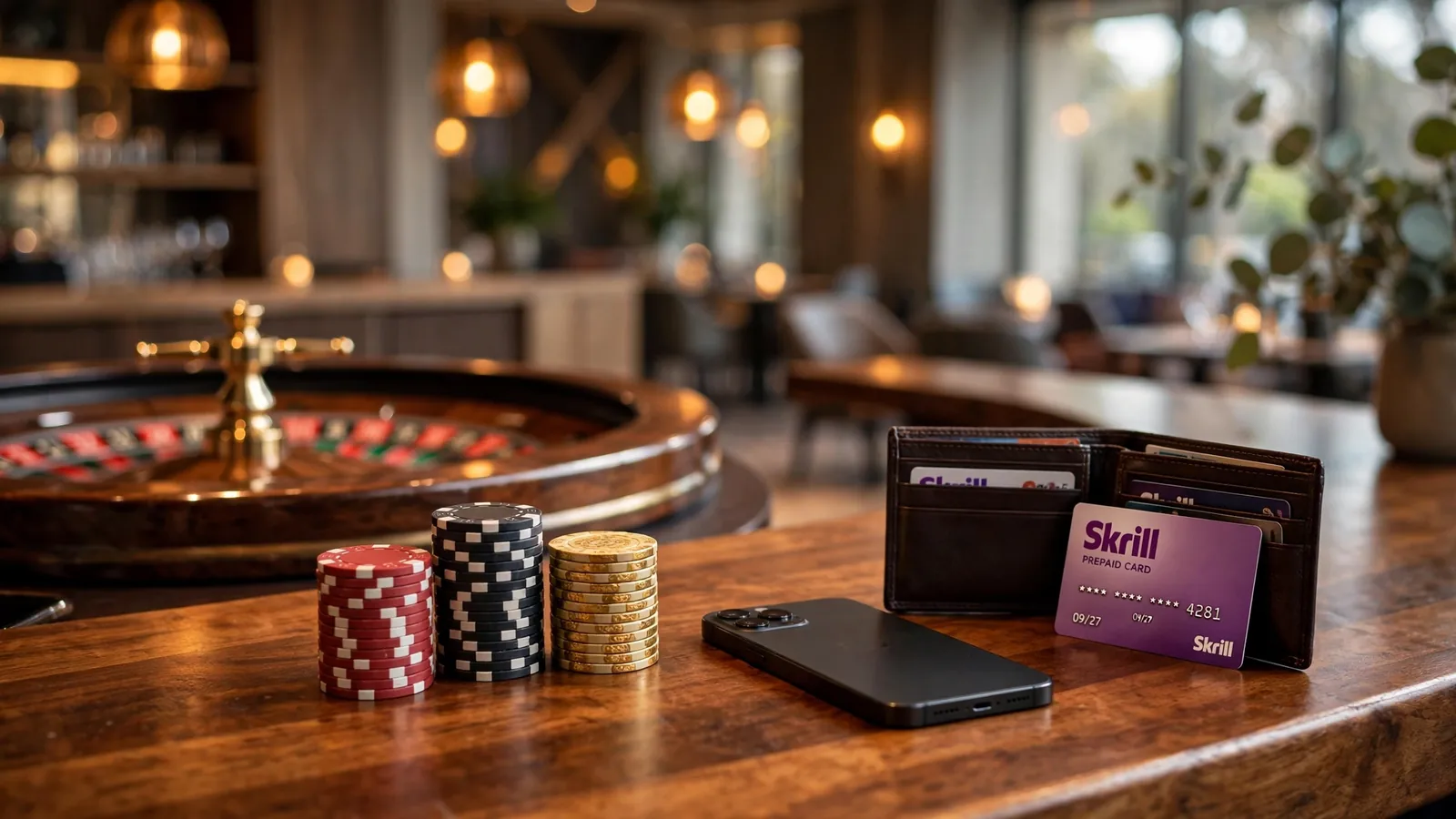
Australia draws a clear legal line between the businesses that provide online casino games and the people who may access offshore sites. Under the Interactive Gambling Act 2001, operators must not offer online casino games to people in Australia. That prohibition covers services such as online poker, table games and pokies when they are provided to customers physically located in the country.
The rule is directed at the provider. It does not explicitly make an Australian player’s use of an offshore casino a criminal offence. That distinction matters: a service can be unlawful for an operator to offer to Australians without the player being treated as having committed the same offence by using it. It is not a declaration that offshore gambling is authorised, protected or equivalent to a lawful domestic service.
The Australian Communications and Media Authority, commonly called ACMA, oversees enforcement of the Act. Its role concerns the law’s restrictions on providers. The distinction between operator conduct and player liability should therefore be read narrowly: the Act prohibits operators from supplying the specified casino services to people in Australia, while it does not explicitly criminalise players for using offshore sites.
If you’re looking for casino sites that accept Skrill in Australia in 2026, use this list as a starting point and check each site’s current payment options before depositing. The available details here identify licensing and, where provided, minimum deposits; they do not confirm Skrill availability.
Uptown Pokies
Uptown Pokies has operated since 2017 and holds a Curacao license. Its stated minimum deposit is A$20.
Vegaz Casino
Vegaz Casino lists Curacao license OGL/2024/1335/0780. Its stated minimum deposit is EUR 20.
Roby Casino
Roby Casino is listed as licensed by Curacao eGaming, with Roby Games Ltd named in connection with the license.
Lucky Dreams
Lucky Dreams is listed with a Curacao license and a minimum deposit of A$20 via POLi.
Thor Casino
Thor Casino is listed with a Curacao license issued by Antillephone N.V., with Versus Odds B.V. named. Its stated minimum deposit is EUR 20.
LevelUp Casino
LevelUp Casino is listed under Curacao eGaming license OGL/2023/174/0082, with Dama N.V. named. Its stated minimum deposit is A$15.
SpinsUp
SpinsUp is listed under Curacao Gaming Control Board license OGL/2023/174/0082, with Dama N.V. named.
DragonSlots Casino
DragonSlots Casino is listed with a Curacao Gaming Authority license, with Jumpman Gaming Ltd named.
Rollero Casino
Rollero Casino is listed under Curacao Gaming Control Board license OGL/2023/176/0095, with Hollycorn N.V. named.
GoldenCrown
GoldenCrown is listed under Curacao Gaming Control Board license OGL/2023/176/0095, with Hollycorn N.V. named.
In everyday conversation, “Australian online casino” can refer to a site aimed at Australian customers, a site that accepts Australian dollars, or a service that can be reached from Australia. Those descriptions do not establish that an operator is permitted to provide casino games to people in the country. A local audience, familiar currency or accessible website does not change the legal position under the Interactive Gambling Act.
The same distinction applies when a payment method is part of the description. A phrase such as “Australian casino that accepts Skrill” combines two separate ideas: the intended audience and a payment option. Neither label alters the Act’s restriction on operators offering online casino games to Australians. Nor does a payment option, by itself, establish the legal status of the service.
This is particularly important when reading claims about Skrill and Australian pokies. Payment wording can make a service sound like an ordinary consumer choice, but the legal question comes first: is the operator allowed to provide that casino service to people in Australia? The Act’s prohibition is not limited to a particular payment method. The checkout label is not a legal category.
An offshore site may be operated from outside Australia and still be offering its service to people physically in Australia. The relevant distinction in the Act is not simply where a company is based; it is whether the prohibited service is being provided to customers in Australia. An overseas address, foreign currency or international payment brand does not, on its own, remove that issue.
At the same time, the player’s position should not be misstated. The Act does not explicitly criminalise Australians for using offshore online casino sites. That does not turn those sites into approved local services, and it does not mean a player has the protections that would accompany a lawful Australian consumer transaction. The operator’s prohibition and a player’s legal liability are separate questions.
That difference can be easy to blur in promotional language. A page may describe a site as available to Australians or present a payment method as suitable for Australian customers. Such phrasing is not proof that the operator may lawfully supply online casino games here. Availability and legality are not interchangeable. Neither is a claim about Skrill acceptance evidence that a service is authorised.
Australian consumer law does not protect players who use offshore casinos. That leaves a practical gap between being able to reach a service and having local consumer protections when something goes wrong. The absence of explicit player criminalisation should not be read as a guarantee of recourse, oversight or safety. Those are different matters from whether a player is prosecuted under the Interactive Gambling Act.
For that reason, descriptions such as “Australian Skrill casino” need to be interpreted carefully. They may describe a site’s intended market or payment claims, but they do not settle the legal position. The governing distinction remains straightforward: the Act prohibits operators from offering online casino games to people in Australia, while it does not explicitly criminalise those people for using offshore sites. The two statements can both be true.
Legal Warning
Under the Interactive Gambling Act 2001, operators are prohibited from providing online casino games to people in Australia, and Australian consumer law does not protect players using offshore casinos.
A cashier can show the steps involved in a payment without proving that every payment method is available. Those are separate questions. In the described Amex flow, the player selects Amex in the cashier, enters the card details and a deposit amount in AUD, then submits the payment.
That sequence describes a transaction’s mechanics: choosing a displayed option, supplying the requested information, setting the amount and sending the payment for processing. It does not establish that another method appears in the same cashier, or that it follows the same steps or timing.
The distinction matters because payment names can sound interchangeable when they are not. Amex is a card payment method; Skrill is a separate service. Knowing how a card transaction is entered tells you nothing by itself about whether a Skrill balance can be used, whether a Skrill account can be linked, or whether the cashier offers Skrill at all. No inference should be made from one method to another.
Nor does a described flow establish access. A method may be named in general discussions, but that does not mean it is currently displayed to a particular customer in a particular cashier. They do not identify a Skrill process.
There is also a legal boundary around the subject. Under the Interactive Gambling Act 2001, operators cannot provide real-money online casino games to people physically in Australia. A description of a payment sequence is not an endorsement or an invitation to use an offshore casino. It should not be read as one.
When a payment option is available in a cashier, a transaction flow can be considered in stages. First, there is selection: the method must be presented as an option. Next, there is entry: the cashier requests details and an amount. Then the payment is submitted. Processing is a further part of the transaction, not something that can be inferred simply from the information-entry screen.
None of those details should be transferred to Skrill. In particular, an instant Amex deposit does not imply instant processing for a Skrill transaction.
This is a useful distinction for any payment method. A general statement that a cashier supports deposits does not, on its own, specify which methods are available. Likewise, a description of entering payment details does not show that another method can be selected. The method itself must be established separately from the transaction steps.
A displayed option and a completed transaction are also not the same thing. The described flow explains what happens when Amex is selected and submitted; it does not turn a description into proof that a payment will succeed in every circumstance. The reader should avoid treating a procedural example as a guarantee.
The Amex process calls for the deposit amount to be entered in AUD. That is a detail of the described card flow, not a general rule for all cashier options. It does not establish what currency a Skrill transaction would use, how a Skrill amount would be entered, or whether any conversion would occur.
This is where broad phrases such as “casino deposit with Skrill” can conceal several distinct questions. Is Skrill shown as a selectable method? What information does the cashier request? What currency is presented? What happens after submission? Each point concerns a different part of the process. The Amex example answers only the corresponding Amex steps.
Amex Deposit Flow
Method Selection
The player selects Amex in the cashier.
Information Entry
The player enters the card details and a deposit amount in AUD.
Submission
The player submits the payment for processing.
The distinction is practical, not technical hair-splitting. A payment method’s name and a payment flow are different kinds of information. One concerns availability; the other concerns what the user does once a method is selected. Confusing them can make a general description sound like a specific acceptance claim.
For Australians, that care should not obscure the underlying restriction: real-money online casino services cannot lawfully be provided to people in Australia. A payment explanation does not change that position. Nor does it make a named payment service an assurance of lawful access.
So, the Amex example can clarify what a cashier sequence may look like: select a method, enter the requested payment details and AUD amount, and submit. It also gives a reported processing characteristic for Amex deposits. It cannot establish a Skrill deposit route, its availability, its steps or its processing time. Different method. Different evidence.
A withdrawal is not simply a deposit played in reverse. A payment method may appear in a cashier for adding funds without being offered as a route for receiving winnings. For Amex, the available account of casino withdrawals describes a specific prerequisite: the player must have made an earlier deposit with Amex. It also reports that not every Australian-facing casino permits withdrawals to that card. These are claims from a specialist review, not a guarantee about any particular cashier or a permanent description of the market.
That distinction matters if you are comparing an advertised payment option with a route you can actually use to receive funds. A method’s presence in a deposit list does not establish that it is available for withdrawals, and a withdrawal rule can depend on whether you used that method before. The Amex condition is therefore more than a minor procedural detail: it can affect whether that route is open to you at all.
A specialist review gives a clearing window of up to five days for Amex casino withdrawals. Treat that as a reported figure, rather than a universal timetable. It does not establish that every operator uses Amex for payouts, that every request will take the same time, or that a stated window describes the full period from requesting a withdrawal to funds appearing in your account.
“Clearing” is also narrower than “instant.” A payment might be described as processed at one stage while the funds have not yet arrived at the destination. The reported Amex window concerns withdrawals clearing; it should not be turned into a promise of instant access or a fixed arrival time. When comparing payment routes, keep the question precise: does the stated time refer to approval, processing, or completed receipt? Without that distinction, two timelines may look comparable when they measure different things.
The same care applies to searches for an instant Skrill withdrawal casino in Australia. The Amex timing does not answer that question. It provides no Skrill withdrawal window, and an Amex clearing estimate cannot be transferred to Skrill simply because both methods may be discussed in casino-payment material. A claim that a Skrill payout is instant needs to be tied to Skrill and to the relevant cashier’s actual withdrawal terms. Otherwise, “instant” is a label without a demonstrated timeline.
Amex Withdrawal Terms
A specialist review reports a clearing window of up to five days for Amex casino withdrawals, provided the player has made an earlier deposit with Amex.
For a withdrawal, there are at least two separate issues: whether the payment method is permitted for receiving funds, and how long a permitted transfer takes to clear. The Amex information illustrates both. A prior Amex deposit is reported as a condition for using Amex withdrawals, while the specialist review’s figure describes a possible clearing period. Neither point cancels the other. Meeting a prerequisite does not guarantee a particular clearing time, and a quoted time does not prove that the method is available to every customer.
This is why a broad phrase such as “fast withdrawals” is not enough to compare routes. It leaves out the method, any eligibility condition, and what stage the timing measures. If your priority is speed, the useful comparison is not between vague labels but between stated withdrawal routes and clearly described clearing windows. Where those details are absent, the speed cannot be assessed from a deposit option or a general payment claim.
The same limits apply to terms about Skrill. Nothing about an Amex prerequisite or Amex’s reported clearing window establishes whether Skrill can receive withdrawals, whether prior Skrill deposits would be required, or how long a Skrill transfer would take. Those details must not be inferred across payment methods. Similar placement in a cashier is not evidence of identical rules.
There is also a broader Australian context: real-money online casino services are prohibited for operators providing them to people in Australia, and Australian consumer law does not protect players using offshore casinos. Payment descriptions should not be mistaken for a recommendation or an assurance of protection. A payout route is only one part of the picture.
For Amex, the narrow takeaway is clear: a specialist review reports a prior-deposit condition, says withdrawal availability is not universal, and gives a clearing window of up to five days. Keep those statements attached to Amex and to the source’s limited claim. They establish neither an instant Skrill payout nor Skrill’s availability. Distinct methods, distinct terms.
A statement that a casino “supports Skrill” is a claim about a particular payment method, not proof that the method is available to every customer or for every transaction. The useful question is narrower: what exactly does the statement establish, and what conditions does it leave unstated? A payment logo or a broad phrase about payment options may indicate a general association, but it does not by itself confirm that Skrill can be selected in a cashier for an Australian customer.
Separate the claim into parts. Does it refer to deposits, withdrawals, or both? Does it specify the customer’s location? Does it describe an option currently shown by the operator, or repeat a general description that may no longer match the service? These distinctions matter because acceptance for one purpose does not demonstrate acceptance for another. A statement that a payment method is “available” is incomplete if it does not say what transaction it applies to.
The next test is whether the claim is tied to a concrete, current condition. Payment information should identify the method by name and make clear which customers and transactions it covers. If the wording only says that a site offers a range of payment methods, it tells you little about whether Skrill is among them. Likewise, mentioning Skrill in a page title or a general list is not the same as confirming its presence in a specific cashier.
Customer checks are another separate issue. Online gambling operators commonly require identity and customer information to be assessed before processing financial activity. That assessment is not evidence that a particular payment method is supported. It is a distinct eligibility and verification step, and a general promise of easy payments should not be read as a promise that a transaction will be accepted or completed.
For Australian readers, these distinctions sit within a restrictive legal setting. The Interactive Gambling Act 2001 prohibits operators from providing online casino games to people in Australia. It does not explicitly make a player’s use of an offshore casino a criminal offence, but that does not make offshore services lawful to offer here or mean that Australian consumer law protects people who use them. Access to offshore casino services is also actively restricted and enforced. Payment language cannot change that position.
So treat a statement about Skrill as a limited factual claim, not a recommendation or assurance. A careful comparison records the method, the transaction type, the customer location covered and any stated conditions, rather than treating a general payment label as a complete answer. It should also distinguish between information about a service and evidence that a transaction is available to a particular customer. Without those distinctions, “supports Skrill” can sound more definite than it is.
That precision matters especially where the surrounding copy uses broad labels such as “best” or “top.” Those labels do not establish payment acceptance, legal status or consumer protection. Nor does a customer’s ability to complete an identity check establish that an operator is permitted to provide casino games in Australia. Keep the questions separate: what a payment claim actually says, what checks may apply, and what the law permits. A neat label is not a licence.
“Best” only has meaning once you name the criterion. A payment option that suits someone prioritising broad acceptance may not suit someone who values a particular service. Without that distinction, a label such as “best Skrill site” says little about whether Skrill fits your needs.
For breadth of acceptance, a specialist review reports that Visa may be accepted at more Australian online casinos than American Express. Treat that as a limited comparison, not a permanent market rule: payment arrangements can change, and the statement concerns those card methods, not Skrill. It does not establish that one method is better for every user.
A useful comparison starts with what you want the method to do. You might be weighing whether it is accepted across services, whether you already use it, or whether its terms suit the transaction you have in mind. Those are separate criteria. A method could rate well on one and poorly on another; a single winner would hide that trade-off.
For Skrill, keep the same standard. A casino described as a Skrill casino is not automatically the best choice for you, and a list of websites does not by itself establish which one performs better against your priorities. Check the specific payment claim and the conditions attached to it rather than treating a general label as a comparison.
| Criterion | What the comparison can establish |
|---|---|
| Breadth of acceptance | Whether a method is reported as accepted across a wider range of services |
| Personal fit | Whether the method matches your existing payment preference |
| Transaction terms | Whether the relevant conditions suit the transaction |
The table is a decision framework, not a ranking. It also avoids treating payment support as a measure of unrelated qualities. A bonus label, for instance, does not tell you whether a payment method is broadly accepted or whether its terms suit you. Nor does a method’s name establish anything about a casino’s games.
If you are comparing Skrill with Visa or Amex, do not assume the card comparison settles Skrill’s position. Each method needs to be judged on the same stated criterion, and claims should be specific enough to identify what is being compared. “Best” without a criterion is decoration.
There is also a legal boundary to keep in view: Australian law prohibits operators from providing real-money online casino games to people in Australia, and Australian consumer law does not protect players who use offshore casinos. Comparing payment criteria does not change that position or amount to a recommendation to use an offshore service.
The practical winner depends on your criterion. If breadth matters most, look for a clear, current comparison on that point; if a particular method matters, focus on that method’s stated terms. Do not let a broad “best” label make the choice for you.
A payment option and a casino’s game catalogue answer different questions. A cashier entry for Skrill, if one is shown, would tell you only that the operator presents Skrill as a payment method. It would not identify which games are available, establish that a particular game can be accessed, or show that a game provider supports Skrill directly.
The reverse is just as important. Seeing a game listed does not establish that Skrill can be used to fund an account associated with it. Payment services generally relate to transactions with the operator, while game availability is determined separately. Treating “Skrill casino games” as one combined feature can therefore blur two checks that need separate evidence.
This distinction matters when comparing claims about casino payment options. A page may discuss Skrill payments without documenting the catalogue, or describe games without confirming a payment route. Neither statement fills the gap in the other. Even a general claim that an operator accepts a method is not evidence about every part of its service.
American Express illustrates the point without proving anything about Skrill: a specialist review has reported that some online casinos do not accept American Express. That is a method-specific claim, not a finding about which games those casinos provide. It also should not be treated as a permanent market-wide rule. Payment support can be described separately from the catalogue, and one does not establish the other.
For you, the useful comparison is between the evidence attached to each claim. Is Skrill named as a payment option, or is the page merely discussing payment methods in general? Is a particular game actually identified, or is the catalogue described vaguely? If either detail is missing, the broader wording should not be read as confirmation. No inference about Skrill-supported games follows from a payment-method mention alone.
There is also an Australian legal boundary to keep in view. The Interactive Gambling Act 2001 prohibits operators from providing real-money online casino games to people in Australia, and Australian consumer law does not protect players who use offshore casinos. A payment reference should not be mistaken for an assurance that a service is lawful, available, or protected for Australian residents.
Keep the categories apart: Skrill concerns a possible payment route; a catalogue concerns game content. Neither, by itself, proves the other.
Everyday payment habits in Australia can involve moving between contactless cards, mobile wallets and services linked to a bank account. Contactless credit and debit cards are accepted almost everywhere, as are mobile wallets such as Google Pay and Apple Pay. That familiarity describes ordinary payment use; it does not establish which methods a particular online service accepts.
Consumers are also comfortable switching between these options and bank-linked services such as PayPal. The practical expectation is flexibility across different settings, not that every merchant—or every type of service—will offer the same choices. A payment option being common in shops or familiar to consumers is not proof that it appears in an online casino cashier.
That distinction matters when considering Skrill. Australian consumers may be used to choosing among several digital payment methods, but general familiarity with digital payments cannot confirm that an Australian-facing casino accepts Skrill. Nor does the phrase “Skrill casino Australia” describe a uniform checkout standard. Availability, where it is claimed, would need to be established for the particular service rather than inferred from wider payment habits.
There is also a legal boundary behind the comparison. The Interactive Gambling Act 2001 prohibits operators from providing real-money online casino games to people in Australia. Australian consumer law does not protect players who use offshore casinos. Payment convenience does not change either point, and a familiar wallet or card should not be read as an endorsement or assurance about a gambling service.
So the useful comparison is between everyday payment preferences and what those preferences can actually tell you. In Australia, cards, mobile wallets and bank-linked services are widely familiar. That helps explain why people expect choice at checkout; it does not verify that Skrill, PayPal, Apple Pay or any card is offered for a particular casino service. Familiar is not confirmed.
A deposit route and a withdrawal route are separate terms, even when they carry the same payment brand. A cashier may accept a method for adding funds without allowing winnings to be returned to it. Treating “deposit accepted” as proof of withdrawal access is a poor shortcut.
A specialist review reports that some casinos may refuse withdrawals to American Express or attach an extra fee. The same review describes deposit and withdrawal limits as set by each operator and subject to variation. These are reported conditions, not a fixed rule for every cashier; terms can differ between services and may change. Check the withdrawal rules themselves rather than assuming that the deposit screen tells the whole story.
For you, the useful comparison is not simply whether a method appears in a list. It is whether the rules allow that method for withdrawals, what conditions apply, and whether a fee is stated. If the terms describe a deposit option but say nothing about withdrawals, that does not establish that winnings can be paid through it. A small distinction, with a large practical effect.
The same standard applies when you are assessing a Skrill withdrawal at an online casino. Information about American Express cannot confirm that Skrill is accepted for withdrawals, that it is available to Australian users, or what conditions or charges would apply. Treat each payment method as its own case; a cashier’s support for one does not prove support for another.
Attention: A deposit route does not guarantee a withdrawal route; some casinos may refuse withdrawals to specific methods or attach extra fees.
There is also a broader context: Australian law prohibits operators from providing real-money online casino games to people in Australia, and Australian consumer law does not protect players who use offshore casinos. Payment terms should not be mistaken for a sign of local approval or protection.
Before relying on any withdrawal claim, read the relevant terms for the method and distinguish withdrawal eligibility from deposit acceptance. If the conditions are unclear, the claim alone is not enough to establish that a particular route is available. No inference by association.
Payment obstacles can arise at different points: a card issuer may block a gambling-related transaction, the card network may decline a payment to a particular website, or a currency conversion charge may affect the amount processed. These are separate causes, not interchangeable explanations for a failed transaction.
Australian banks may block gambling-related Amex transactions at the issuer level. Separately, a specialist review has described an Amex deposit being declined when Amex blocks payments to a particular website. In either case, a decline does not by itself show whether the cashier lists the method as available; the restriction may sit with the bank or card network instead. A displayed payment option is not a promise that every attempted payment will clear.
Currency conversion is another distinct cost. A specialist review reported a 3% conversion fee on Amex cards. That figure should be read as a claim about the circumstances described in that review, not as a universal charge on every Amex transaction. The relevant question is which currency the transaction is processed in and what conversion terms apply to the card. A charge tied to conversion is also different from a fee imposed by the operator.
For you, the useful comparison is the point at which a cost or block can arise: issuer, card network, or currency conversion. Checking one does not settle the others. A cashier may present a payment route while the issuer still refuses the transaction, and a successful payment can still involve conversion costs.
That distinction matters when comparing payment methods. An Amex-specific block or fee should not be treated as a rule for Skrill, nor should an assumption about Skrill be inferred from card behaviour. Each method has its own terms and acceptance conditions.
Finally, Australian consumer law does not protect players who use offshore casinos. That is a material risk, not fine print. The legal position also restricts operators from providing online casino games to people in Australia; payment details do not change that position.
A payment method being discussed in general does not establish that it appears in a particular cashier. A specialist review has reported that some Australian-facing online casinos accept Amex deposits, but that is a limited claim about one payment method—not confirmation that every operator offers it or that Skrill is available.
To verify a method, the relevant evidence is the cashier’s own current payment information and the terms attached to the transaction. A page mentioning Skrill, or discussing casino payments broadly, is not enough to show that Skrill can be selected for a deposit. Nor does a payment reference establish anything about which games a site offers. Payment support and game availability are separate checks.
The distinction matters even when a method is familiar. A cashier may display a method only for certain transactions, while a general description may not reflect the options available to a particular customer. Confirm the method and its stated conditions before relying on a claim.
There is also a more fundamental limit in Australia: the Interactive Gambling Act 2001 prohibits operators from providing real-money online casino games to people in the country. Australian consumer law does not protect players who use offshore casinos. Verifying a payment option should not be mistaken for confirmation that an offshore service is lawful, locally protected or suitable to use.
A clear answer has a narrow scope: it identifies the payment method, the transaction it applies to and where that information is shown. Anything broader needs separate evidence. A mention is not availability.
Check the casino cashier’s payment options for American Express before depositing. Some casinos do not accept Amex, and availability can vary by site.
Limits are set by each casino and can vary. Check the cashier or the casino’s payment terms for its current Amex deposit and withdrawal limits.
An Amex deposit may be declined if American Express or your Australian bank blocks gambling payments to that website.
Yes. Each casino sets its own Amex deposit and withdrawal limits, so check the cashier or payment terms for the limits that apply to you.
Some casinos do not allow withdrawals to Amex, and you generally need to have deposited with Amex first. Where available, an Amex withdrawal can take up to five days to clear.
Jackpot City Casino, Spin Palace, Ruby Fortune, Ignition Casino, Joe Fortune and PlayAmo are listed as supporting Amex deposits for Australian players. Check the cashier, as availability may vary.
Amex deposits are typically free, but a casino may add a 1.5% surcharge, and Amex cards can incur a 3% currency conversion fee. Withdrawal fees may also apply, depending on the casino.